In today’s digital world, calculators are no longer limited to simple addition, subtraction, multiplication, and division. With the growth of artificial intelligence, a new type of calculator has become increasingly useful: the AI Calculator.
An AI calculator combines traditional mathematical calculations with artificial intelligence to understand questions, recognize different types of problems, explain solutions, and help users reach answers more efficiently. Instead of entering only numbers and mathematical symbols, users can often describe a problem in everyday language.
For students, teachers, professionals, researchers, and anyone who works with numbers, an AI calculator can be a convenient learning and productivity tool.
What Is an AI Calculator?
An AI Calculator is a digital calculator that uses artificial intelligence to understand and process mathematical questions. Traditional calculators generally require users to enter formulas in a specific format. AI-powered calculators can be more flexible because they may understand natural-language questions and provide contextual answers.
For example, instead of entering:
125 × 24
a user might ask:
“What is 125 multiplied by 24?”
An AI calculator can interpret the question and calculate the result.
More advanced tools can handle topics such as algebra, percentages, equations, unit conversions, statistics, and other mathematical tasks. Some can also provide step-by-step explanations, making them useful not only for finding an answer but also for understanding how the answer was reached.
How Does an AI Calculator Work?
An AI calculator generally combines several technologies to process a user’s question.
First, the system interprets the input. If the user writes a mathematical problem in ordinary language, artificial intelligence can identify the important numbers, operations, and conditions.
Next, the system determines what type of calculation is required. Depending on the tool, it may use mathematical algorithms, symbolic computation, or other computational methods to produce the result.
Finally, the answer is presented to the user. Some AI calculators simply display the final result, while others explain the process in a way that is easier for beginners to understand.
This combination of language understanding and mathematical computation is what makes an AI calculator different from a basic calculator.
Why Use an AI Calculator?
There are several reasons people are turning to AI-powered calculators.
1. Faster Calculations
An AI calculator can save time when a problem involves several steps. Instead of manually working through each part, users can enter the problem and receive a result quickly.
This can be especially useful when checking calculations, completing routine tasks, or working with large numbers.
2. Easy-to-Understand Questions
One of the biggest advantages is that users may not need to know complicated calculator syntax. They can often describe the problem in natural language.
For example:
“Calculate 18% of 750.”
This is much easier for many beginners than trying to remember a particular mathematical formula.
3. Step-by-Step Learning
Some AI calculators can explain how a problem is solved. This feature can make them valuable educational resources.
A student who receives only an answer may know what the result is but may not understand the process. A detailed explanation can help the student identify the mathematical concept behind the problem.
4. Fewer Manual Errors
Manual calculations can sometimes lead to mistakes, especially when a problem contains multiple operations. An AI calculator can help users check their work and identify possible calculation errors.
However, users should still review important results rather than assuming every AI-generated answer is automatically correct.
5. Useful for Different Skill Levels
AI calculators can be helpful for beginners as well as advanced users. A school student might use one to understand percentages, while a university student could use a more advanced tool for algebra or statistics.
AI Calculator for Students
Students are one of the largest groups that can benefit from AI-powered calculation tools.
Mathematics often requires students to understand both the answer and the method used to reach it. An AI calculator can act as a supplementary learning tool by showing explanations, formulas, or intermediate steps.
For example, students may use an AI calculator to practice:
- Basic arithmetic
- Fractions
- Percentages
- Ratios
- Algebra
- Linear equations
- Geometry
- Statistics
- Unit conversions
- Word problems
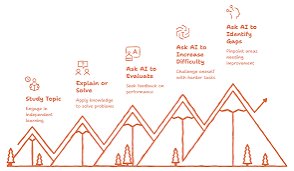
The best way to use an AI calculator for education is as a learning assistant rather than simply a shortcut for homework.
Students should try to solve a problem themselves first and then use the calculator to check the result or understand where they made a mistake.
AI Calculator for Everyday Use
You do not have to be a student or mathematician to use an AI calculator.
AI-powered calculations can help with many everyday situations.
For example, someone planning a household budget may need to calculate monthly expenses. A shopper may want to determine a discount. A traveler may need to convert currencies or units. A homeowner may want to estimate measurements for a project.
Common everyday calculations include:
Discounts:
“How much is 25% off $80?”
Percentages:
“What percentage is 45 out of 60?”
Budgeting:
“If I spend $350 each week, how much will I spend in a month?”
Conversions:
“How many centimeters are in 5 feet?”
These examples show why natural-language calculation can be convenient for people who do not regularly work with mathematical formulas.
AI Calculator vs. Traditional Calculator
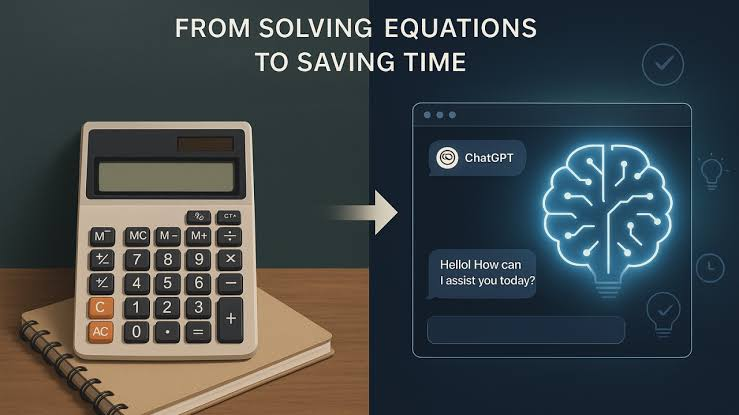
A traditional calculator is excellent for straightforward numerical calculations. It is fast, reliable for basic arithmetic, and easy to use.
An AI calculator goes a step further by attempting to understand the user’s question.
The main difference is interaction.
A traditional calculator may require:
450 ÷ 15
An AI calculator may accept:
“Divide 450 by 15 and explain the calculation.”
This does not mean AI calculators are always better. Traditional calculators remain extremely useful for quick calculations, especially when users already know exactly what operation they need.
AI calculators are particularly helpful when the question requires interpretation or explanation.
What Can an AI Calculator Calculate?
The capabilities depend on the specific tool, but modern AI calculators may support many mathematical tasks.
Basic Arithmetic
Addition, subtraction, multiplication, and division are the foundation of most calculators.
Percentages
AI calculators can quickly calculate discounts, increases, decreases, percentages, and percentage differences.
Algebra
Some advanced tools can help solve equations and simplify algebraic expressions.
Geometry
Depending on the calculator, users may be able to calculate areas, perimeters, volumes, and other geometric measurements.
Statistics
Certain AI-powered tools can assist with averages, medians, percentages, probability, and other statistical calculations.
Unit Conversion
AI calculators may also help convert measurements such as length, weight, temperature, and volume.
How to Use an AI Calculator Effectively
Getting better results often depends on how clearly the question is written.
Instead of entering a vague request such as:
“Calculate this.”
provide the complete problem.
For example:
“A product costs $120 and has a 15% discount. What is the final price?”
A clear question gives the calculator enough information to understand what you want.
It is also helpful to check the result when the calculation is important. AI systems can occasionally misunderstand ambiguous questions or produce incorrect results. For financial, academic, scientific, or professional work, verify important calculations with a reliable secondary method.
Benefits of AI Calculators for Education
AI calculators can support modern learning in several ways.
They can provide immediate feedback, help students identify mistakes, and make complicated mathematical concepts easier to explore.
Instead of waiting for a teacher to check every practice problem, students can use digital tools to experiment with different numbers and observe how the results change.
This can encourage independent learning.
However, technology should support education rather than replace it. Students still need to understand mathematical concepts, practice problem-solving, and develop critical thinking skills.
Are AI Calculators Accurate?
AI calculators can be highly useful, but accuracy depends on the technology behind the tool and the type of problem being solved.
Basic numerical calculations are generally straightforward. More complicated problems may involve interpretation, assumptions, or multiple mathematical steps.
For that reason, users should not blindly trust an AI-generated answer.
A good practice is to:
- Read the question carefully.
- Check that the calculator understood the information.
- Review the formula or steps when available.
- Verify important results independently.
- Ask for clarification if the answer seems unusual.
This is especially important when calculations affect money, business decisions, academic work, or professional projects.
Tips for Getting Better Results
To get the most useful response from an AI calculator, write specific instructions.
Instead of:
“Find the percentage.”
try:
“Find what percentage 35 is of 140.”
If you need an explanation, say so:
“Calculate 35% of 240 and show the steps.”
You can also specify the desired format, such as decimals, fractions, percentages, or rounded numbers.
Clear instructions reduce ambiguity and make the result easier to understand.
The Future of AI Calculators

Artificial intelligence is changing how people interact with digital tools. Calculators are likely to become more conversational, educational, and capable of handling increasingly complex tasks.
Future AI calculators may provide better explanations, understand handwritten mathematical problems, work with images, and integrate calculations with educational platforms and productivity software.
For students, this could mean more personalized mathematical assistance. For professionals, it could mean faster analysis and fewer repetitive tasks.
The goal is not simply to produce answers faster. The bigger opportunity is to make mathematical information easier for people to understand and use.
Final Thoughts
An AI Calculator is more than a digital replacement for a traditional calculator. It can combine mathematical computation with artificial intelligence to understand questions, perform calculations, explain solutions, and support learning.
Whether you are a student checking homework, a professional reviewing numbers, or someone trying to solve an everyday calculation, an AI calculator can save time and make mathematical tasks more accessible.
The most effective approach is to use AI as an assistant. Let it help you calculate, explain, and check your work, while continuing to develop your own understanding of mathematics.
As AI technology continues to improve, calculators will likely become even more interactive and useful. For anyone who regularly works with numbers, learning how to use these tools effectively can be a valuable digital skill.