
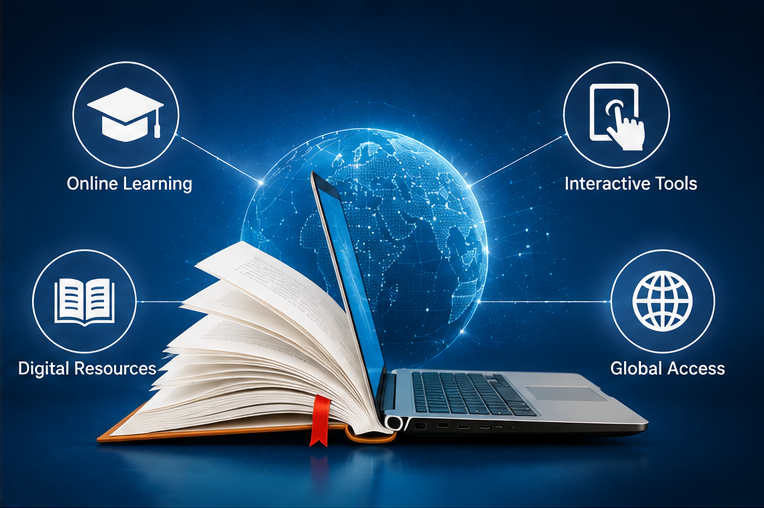
Education is changing faster than ever before. Traditional classrooms, printed textbooks, and fixed study schedules are no longer the only ways people can learn. With the growth of the internet, smartphones, cloud technology, and artificial intelligence, online learning and digital resources have become an important part of modern education.
Students can now attend virtual classes, watch educational videos, access digital libraries, complete interactive exercises, and even receive personalized learning support from anywhere in the world. This transformation is making education more flexible and accessible while also creating new opportunities for teachers, schools, universities, and lifelong learners.
The future of education is likely to combine the strengths of traditional teaching with the convenience and innovation of digital learning.
What Is Online Learning?
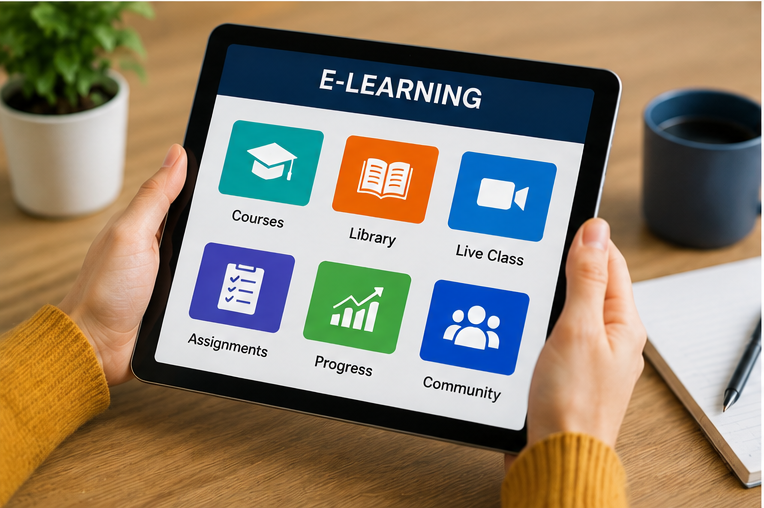
Online learning is an educational approach in which students use internet-connected devices to access lessons, courses, assignments, and learning materials. Instead of being physically present in a classroom for every lesson, learners can study through laptops, tablets, or smartphones.
Online education can include:
- Live virtual classes
- Recorded video lectures
- Online courses
- Digital assignments and quizzes
- Educational applications
- Virtual discussion groups
- Digital textbooks
- Interactive learning platforms
Some programs are completely online, while others use a blended learning model that combines classroom teaching with digital activities.
Why Online Learning Is Growing
One of the main reasons behind the rapid growth of online learning is convenience. Traditional education usually requires students to follow a fixed timetable and attend a specific location. Online education can remove many of these limitations.
Students may be able to study at home, during a work break, or while traveling. Working professionals can improve their skills without leaving their jobs, while people living far from major educational institutions can access courses that might otherwise be unavailable to them.
Another major factor is the increasing availability of digital devices and internet connectivity. As technology becomes more accessible, digital education can reach a wider audience.
Digital Resources Are Transforming Education
Digital resources include almost any electronic material designed to support learning. These resources have changed how students find information, understand difficult concepts, and practice new skills.
Digital Textbooks and E-Books
Digital textbooks provide a convenient alternative to traditional printed books. Students can store many books on one device, search for specific terms quickly, highlight important information, and access additional multimedia resources.
E-books can also be updated more easily than printed materials, which is particularly valuable in rapidly changing subjects such as technology, science, business, and cybersecurity.
Educational Videos
Videos have become an important educational resource because they can explain complex ideas visually.
A student struggling to understand a scientific process, mathematical equation, or technical concept can watch a demonstration and replay difficult sections as many times as necessary.
Visual learning can make complicated subjects easier to understand and may help students remain engaged.
Online Libraries and Research Resources
Digital libraries give learners access to books, research papers, journals, reports, and reference materials without requiring them to visit a physical library.
This can make research faster and more convenient, particularly for university students and researchers.
However, learners still need strong information-literacy skills so they can distinguish reliable academic resources from inaccurate online information.
Major Benefits of Online Learning
1. Greater Flexibility
Flexibility is one of the biggest advantages of digital education.
Many online courses allow students to learn at their own pace. Learners can organize study sessions around work, family responsibilities, and other commitments.
This flexibility is particularly useful for working professionals and adult learners.
2. Learning From Anywhere
Geographical location is becoming less important in education.
A student living in a small town can potentially access educational materials created by universities, teachers, and specialists located thousands of kilometers away.
This creates opportunities for people who may not have easy access to specialized educational institutions.
3. Wider Choice of Subjects
Online education provides access to an enormous range of subjects.
Students can learn traditional academic topics as well as practical skills such as:
- Digital marketing
- Graphic design
- Programming
- Data analysis
- Business management
- Foreign languages
- Communication skills
- Cybersecurity
This variety allows learners to select courses according to their career plans and personal interests.
4. Self-Paced Learning
Not every student learns at the same speed.
In a traditional classroom, teachers usually need to follow a schedule that serves an entire group. Digital learning can give individual students more control.
A learner can replay a difficult lecture, repeat an exercise, or move quickly through material they already understand.
5. Development of Digital Skills
Online education naturally encourages students to become more comfortable with technology.
They may learn how to participate in video meetings, manage digital documents, collaborate remotely, research information online, and use different software platforms.
These skills are increasingly valuable in modern workplaces.
Artificial Intelligence and the Future of Learning
Artificial intelligence is likely to play an increasingly significant role in education.
AI-powered educational systems can potentially analyze a student’s progress and provide learning materials based on individual needs. For example, if a learner repeatedly struggles with a particular mathematical concept, an intelligent learning system may provide additional explanations and practice exercises.
AI can also assist with language learning, writing feedback, tutoring, lesson planning, and administrative tasks.
However, AI should support rather than completely replace teachers. Human educators provide judgment, motivation, emotional understanding, mentorship, and social interaction that technology cannot fully reproduce.
Personalized Education
Traditional education often follows a standardized model in which many students receive similar lessons at approximately the same pace.
Digital technology makes greater personalization possible.
Educational platforms can track factors such as quiz performance, completed lessons, common mistakes, and learning progress. This information can help identify areas where a student needs additional support.
Personalized learning could therefore become one of the most important developments in the future of education.
Virtual and Augmented Reality in Education
Virtual reality (VR) and augmented reality (AR) could make digital education even more interactive.
Imagine studying ancient history by virtually exploring a historical city or learning human anatomy through an interactive three-dimensional model.
Medical students could practice procedures in simulated environments, while engineering students could examine virtual machinery before working with real equipment.
These technologies can transform learning from simply reading information into experiencing and interacting with it.
Gamification Makes Learning More Engaging
Gamification means using elements commonly associated with games—such as points, levels, achievements, challenges, and rewards—in educational activities.
A language-learning application, for example, might reward students for completing daily lessons or maintaining a learning streak.
When implemented appropriately, gamification can encourage participation and make repetitive practice more enjoyable.
The goal, however, should remain meaningful learning rather than simply collecting points or rewards.
The Growing Importance of Microlearning
Modern learners often prefer shorter and more focused educational content.
Microlearning divides larger subjects into small lessons that can often be completed within a few minutes. Instead of watching a two-hour lecture, students might complete several short lessons focused on individual concepts.
This approach can be particularly effective for professional training, revision, and skill development.
It also makes learning easier to fit into busy schedules.
Challenges of Online Education
Despite its advantages, online education has several important challenges.
Digital Divide
Not every student has reliable internet access, a suitable device, or a quiet environment for studying.
If education becomes heavily dependent on technology without addressing these inequalities, some students could be disadvantaged.
Schools, governments, and educational organizations therefore need to consider accessibility when developing digital learning programs.
Lack of Face-to-Face Interaction
Traditional classrooms provide opportunities for direct communication with teachers and classmates.
Completely online learning can sometimes feel isolated, particularly when courses provide limited interaction.
Virtual discussions, group projects, live classes, and regular teacher feedback can help reduce this problem.
Distractions
Studying online requires discipline.
Social media, entertainment platforms, games, messages, and other online distractions are only a few clicks away. Students need effective time-management skills and a structured learning environment.
Quality of Online Information
The internet contains an enormous amount of educational information, but not all of it is accurate.
Students should learn how to evaluate sources, verify claims, identify credible authors, and compare information from multiple reliable references.
Digital literacy will therefore become an essential educational skill.
The Changing Role of Teachers
Technology does not necessarily make teachers less important. Instead, their role is evolving.
Teachers are increasingly becoming learning guides and mentors rather than simply sources of information.
Digital tools can handle some repetitive activities, but educators remain essential for explaining difficult ideas, encouraging critical thinking, providing meaningful feedback, and supporting students.
Successful education in the future will likely depend on teachers who can combine strong teaching skills with effective use of technology.
Online Learning and Career Development
Digital education has also changed professional development.
Employees no longer always need to attend long in-person training programs to learn new skills. Online courses can help professionals improve their knowledge while continuing to work.
This is especially important because industries are changing rapidly.
Skills related to artificial intelligence, cloud computing, cybersecurity, digital marketing, data analytics, and software development are evolving continuously. Professionals may need to keep learning throughout their careers to remain competitive.
This idea is often called lifelong learning, and online education makes it much more practical.
Traditional Education vs. Online Education
The future probably will not involve choosing only one system.
Traditional classrooms provide valuable human interaction, structured learning, teamwork, and direct teacher support. Online education provides flexibility, accessibility, personalization, and a huge variety of digital resources.
A combination of both approaches can offer significant advantages.
This model is known as blended learning.
For example, students might attend school for discussions, laboratory activities, and group projects while completing lectures, quizzes, reading, and revision online.
Such a system can use technology where it is most useful without losing the social benefits of classroom education.
How Students Can Succeed With Digital Learning
Access to technology alone does not guarantee educational success. Students need good learning habits.
Creating a regular study schedule, setting realistic goals, taking notes, limiting distractions, participating in discussions, and reviewing progress can improve online learning outcomes.
Students should also avoid relying completely on AI or automated tools to complete their work. Digital tools are most valuable when they help learners understand concepts, develop ideas, practice skills, and improve their own work.
Critical thinking should remain at the center of education.
What Will the Future Classroom Look Like?
The classroom of the future may be significantly more connected and flexible than today’s traditional classroom.
Students could use smart devices, interactive displays, AI-powered learning assistants, digital textbooks, cloud-based assignments, virtual laboratories, and immersive simulations.
Teachers may use learning analytics to identify students who require additional help and adjust lessons accordingly.
At the same time, physical classrooms will remain valuable spaces for communication, collaboration, creativity, and social development.
Technology is therefore more likely to transform classrooms than eliminate them.
Future Trends in Online Learning and Digital Resources
Several trends are likely to shape digital education in the coming years:
- Greater use of artificial intelligence
- More personalized learning experiences
- Growth of short online courses and professional certifications
- Increased use of virtual and augmented reality
- Expansion of mobile learning
- More interactive digital textbooks
- Greater emphasis on digital literacy
- Increased adoption of blended learning
- Growth of lifelong professional education
As these technologies develop, education may become more adaptable to the needs of individual learners.
Conclusion
The future of education, online learning, and digital resources are closely connected. Technology is creating new ways for students to access knowledge, develop skills, communicate with teachers, and continue learning throughout their lives.
Online education offers important benefits, including flexibility, accessibility, personalized learning, and access to a wide variety of subjects. At the same time, challenges such as unequal internet access, distractions, misinformation, and reduced face-to-face interaction must be addressed.
The strongest educational systems of the future are unlikely to depend entirely on either technology or traditional classrooms. Instead, they will combine skilled teachers, effective digital resources, intelligent learning tools, and meaningful human interaction.
When used responsibly, technology can make education more accessible, engaging, flexible, and relevant to the needs of a rapidly changing world.